How to write fashion email marketing that gets opened
Fashion email that gets opened and drives sales: Welcome flows, launch sequences, and win-backs, with subject lines, copy, and on-brand header images written and designed in one session.
Have your email platform ready (Klaviyo, Mailchimp, or similar) and a product or campaign in mind. Have your product shots on hand: Upload them, or @mention a saved product card if you've saved it in SecretSauce.
How it works
1
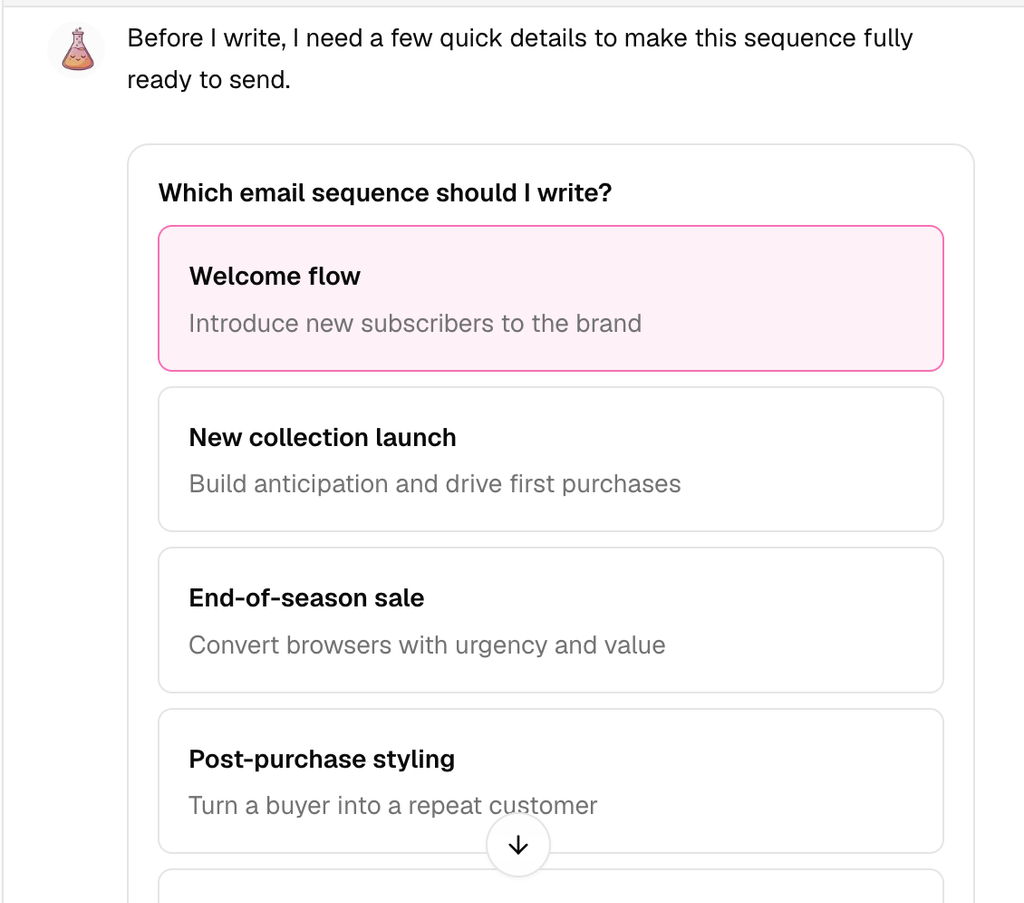
Map the email sequence
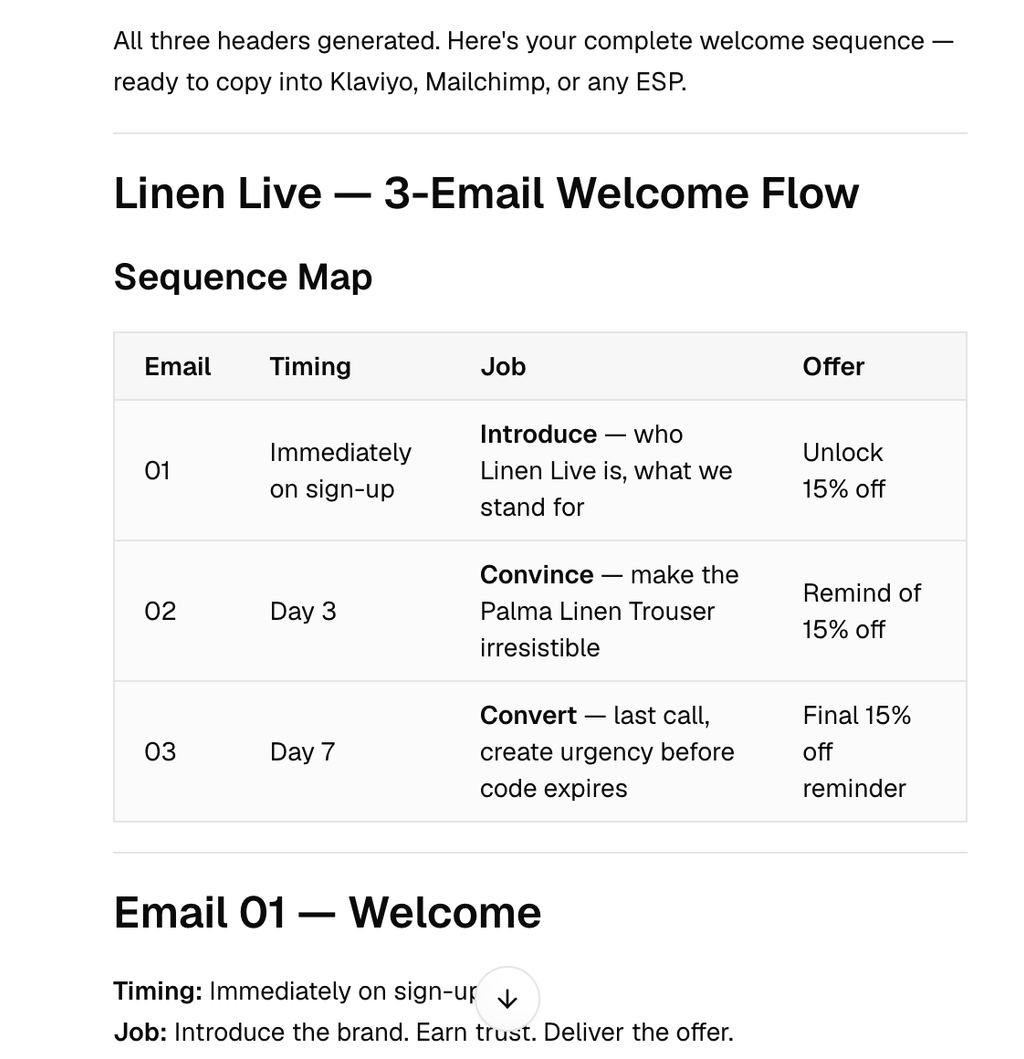
Plan the full flow for the campaign you're running: The number of sends, the gap between each, the subject-line angle per email, and the single job each one does (introduce, convince, or convert).
2
Write the email copy
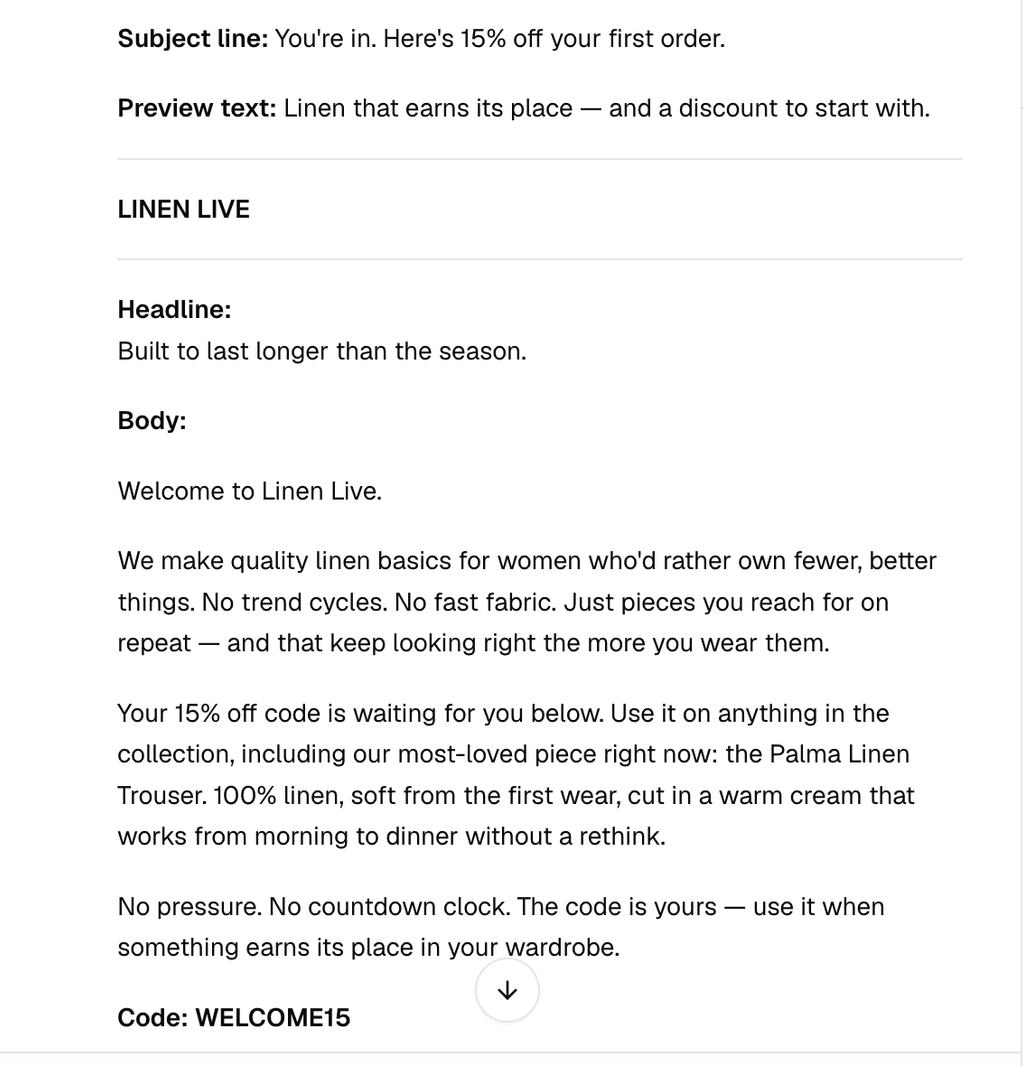
Write every send in the plan with /copywriting: The subject line, preview text, headline, body that tells a story around the product, and one CTA matched to that email's job.
3
Design each header image
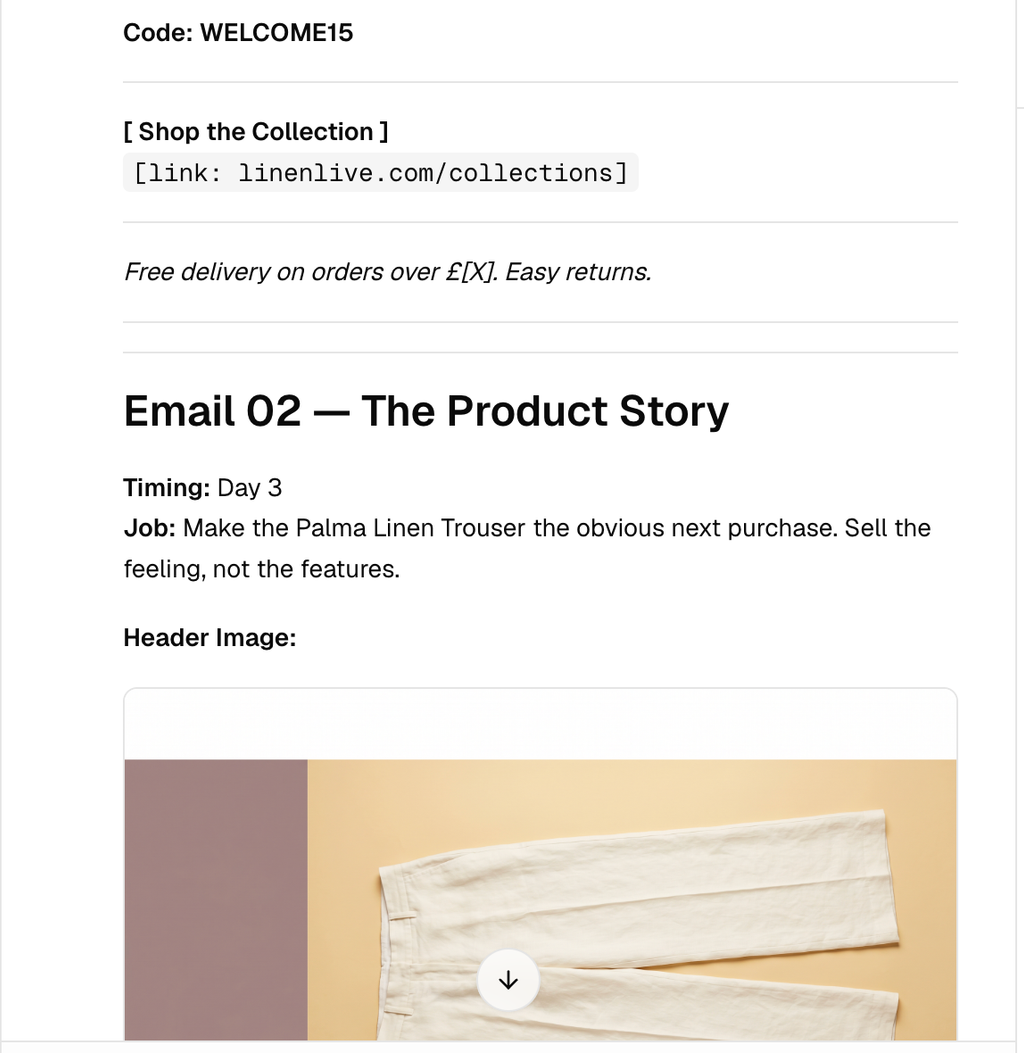
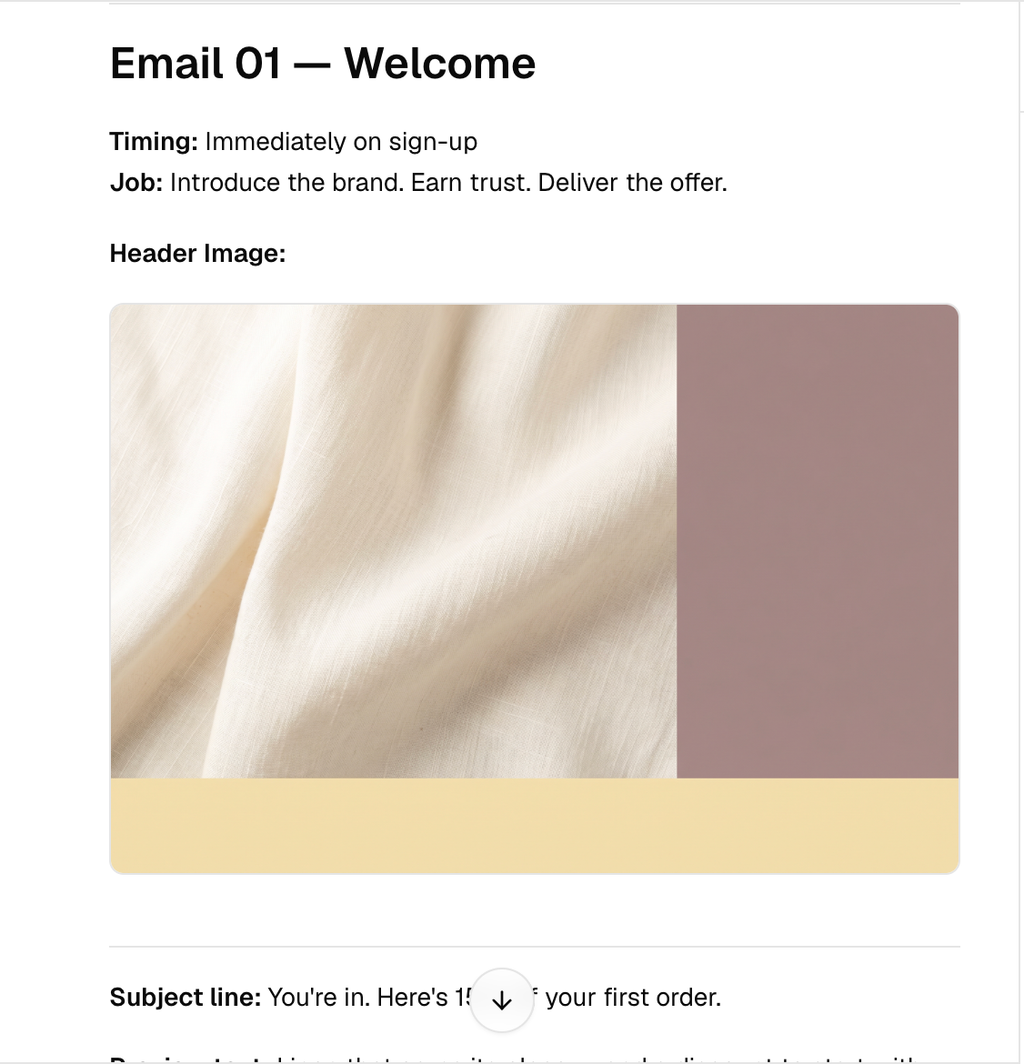
Create an on-brand email header for every send, built from the featured product photo, color-matched to the brand, and generated at the size it needs to drop into your email platform.
Email is the highest-converting channel most fashion brands have, and it's the cheapest to run. Someone on your list already raised their hand: They subscribed because they want to hear from you. That's a warmer audience than anyone who taps a paid ad, and a well-timed email with the right subject line and a product they want converts at a rate paid channels rarely match.
It also compounds. A launch email on drop day, a welcome flow that turns a new subscriber into a first-time buyer, a win-back that brings someone back six months after their last order: All of it runs on the list you already own, and it gets easier every time you send. Here's what drives revenue for fashion brands, what gets an email opened, and how to write a full sequence in one sitting.
The five email types that drive the most revenue for fashion brands
Not every email pulls its weight. The ones that move product for fashion brands tend to fall into five familiar shapes.
The welcome flow: Someone just subscribed, so they're at peak curiosity about your brand. A three-email welcome flow introduces who you are, makes the case for your hero product, and closes with a first-purchase offer before that curiosity cools. Welcome emails consistently beat regular campaign sends on both open and click-through rates.
The collection or drop announcement: One to three emails building to a launch: A teaser that creates anticipation, a reveal on drop day, and a follow-up for everyone who looked but didn't buy. Brands that do this well build the email alongside the product so both land together, part of the same launch campaign.
The end-of-season sale: A tight sequence with a clear deadline. The first email announces the sale and the discount, the second nudges non-openers, and the third is a final 24-hour push. Urgency is the engine, but the copy has to earn it: "Last chance" only works when it's true.
The post-purchase styling email: Sent a few days after delivery, this one turns a first-time buyer into a repeat customer. It helps more than it sells: How to style the piece, what to wear it with, where it'll take you. Brands that send it retain better than the ones that skip it.
The win-back flow: For subscribers who've gone quiet for 90 days. Two emails: One worth opening that reintroduces the brand, and one that gives a real reason to come back. If they still don't engage, let them go, because a clean, engaged list outperforms a big, cold one every time.
What gets a fashion email opened
A fashion email gets opened when the subject line promises something specific and it comes from someone the reader recognizes. Everything else, the copy, the images, the offer, only matters once the open happens. A few things that consistently work:
Specificity beats cleverness: "The trouser that sold out last summer is back" outperforms "You're going to love this" every time. Tell them exactly what's inside.
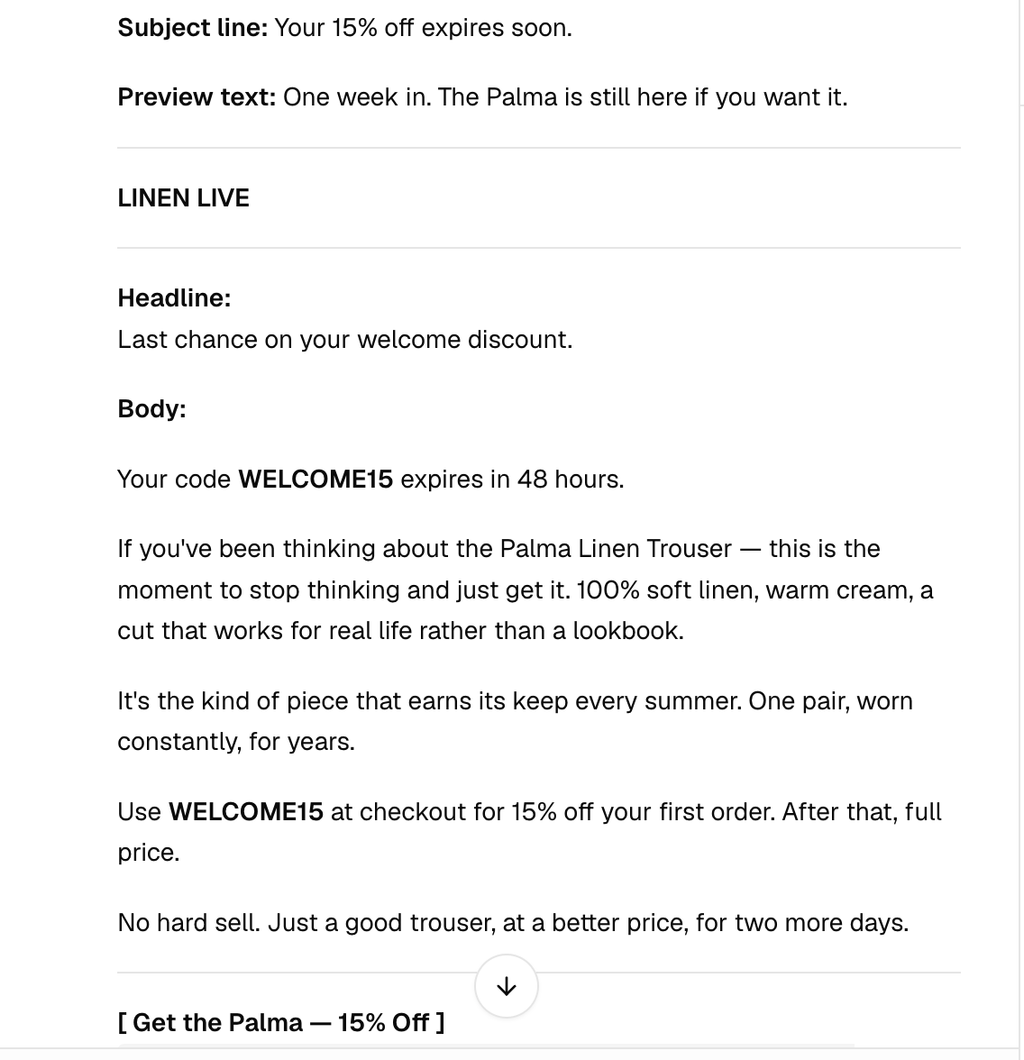
Preview text is half the subject line: The grey text next to the subject in most inboxes is prime space, so use it to extend the thought instead of repeating it. Pair "Your 15% off expires soon" with "One week in, and the Palma is still here if you want it."
Send from a person, not an inbox: Emails from "bel@yourbrand.com" or "Bel at Your Brand" beat "hello@yourbrand.com". People open emails from people.
The header image works as hard as the copy: A fashion email needs a header that matches your visual world, because the image sets the mood before the first word is read. It should look like your Instagram feed, and it starts from a clean product photo.
What makes fashion email copy convert
Fashion email copy converts when it makes the product feel worth buying right now. The emails that sell share a few habits:
Lead with the product, not the discount: The offer is the reason to act today, and the product is the reason to want it at all. Most brands headline "15% OFF" and bury the piece, while the ones that write around the product first convert better.
Write like you talk: Copy that reads like a press release moves no one. The emails that get clicked sound like they came from a person who loves the thing they're describing, so use short sentences, contractions, and real opinions.
One email, one job, one CTA: Welcome emails introduce, story emails convince, and last-call emails convert. Ask a subscriber to do one thing per send and build everything toward it.
Ten fashion email campaigns worth stealing
The best fashion campaigns reuse a handful of reliable angles, each matched to a moment in the customer's life. Here are ten worth putting on the calendar, with a sample subject line for each to adapt in your own voice.
The backstory launch: Introduce a new piece by leading with why you made it and who it's for, so it reads like editorial instead of a spec sheet. Subject line: "Meet the coat we spent a year getting right."
The 'just because' sale: Give a low-stakes, human reason for a discount, because transparency feels refreshing and the reason doesn't have to be logical. Subject line: "40% off dresses because it's too hot to think."
VIP early access: Frame the perk as insider status rather than a deeper discount, and open it to your best buyers a day early. Subject line: "You're in first: The sale starts for you tonight."
Item-level scarcity: Name the exact piece and how little is left instead of a vague "selling fast." Subject line: "Only 12 of the linen trouser left in your size."
The restock: Bring back a sold-out favorite and tell the people who missed it the first time. Subject line: "The trouser that sold out last summer is back."
Post-purchase styling: A few days after delivery, show three ways to wear what they bought. Subject line: "Three ways to style your new blazer."
The seasonal edit: Curate a small, opinionated selection for the moment, whether that's the holidays, back-to-work, or the first warm week, rather than the whole catalog. Subject line: "Five pieces for the first warm week."
The birthday reward: One offer, one code, one button, sent on the day. Subject line: "A little something for your birthday."
Win-back honesty: For quiet subscribers, sound like a real person and be upfront that you'll stop emailing if they'd rather. Subject line: "Should we say goodbye?"
The referral nudge: Ask happy customers to bring a friend, with a clear three-step how-it-works so there's no friction. Subject line: "Give a friend 15%, get 15% back."
How to write a full fashion email sequence in minutes with SecretSauce
SecretSauce writes and designs the whole sequence from one prompt: Subject lines, preview text, body copy for every send, and on-brand header images. Here's how the pieces come together.
Map the flow first: Tell SecretSauce the campaign you're running and it plans the sequence before writing a word: How many sends, the gap between each, the subject-line angle per email, and the job each one does. You approve the plan before anything gets generated.
Write every email with /copywriting: It drafts the subject line, preview text, headline, body that tells a story around the product, and a CTA matched to each email's job, all in your brand voice.
Design a header for each send: Starting from your product photo, SecretSauce styles and color-matches an email header and sizes it to drop straight into Klaviyo, Mailchimp, or whichever platform you use.
Get your setup notes: Alongside the copy and images you get the implementation details: Trigger settings, send timing, image dimensions, and CTA button color, so building the flow in your platform takes minutes.
From there, drop the copy and headers into your email platform and hit send, or switch the sequence on as an automated flow.
Why this beats writing it yourself
This beats writing it yourself because a three-email welcome flow, with good subject lines, copy that sounds like you, and headers that match your aesthetic, usually eats the better part of a day. A launch sequence eats more, and both need to happen regularly for email to drive real revenue. When a full sequence takes one short session instead, email stops being the thing you'll get to eventually and becomes part of how you launch every product. The brands that win at email are the ones that send consistently, to an engaged list, in a voice that's unmistakably theirs.