The small business guide to TikTok UGC
Most small brands already know that they need a steady stream of video to sell on TikTok. The hard part is making 20 videos a month that all look like they came from the same company.
This is the point where TikTok UGC gets messy. Every creator films your product their own way. AI tools forget your brand the second you close the tab. By video 15, your colors are off and your tone sounds like someone else's.
Here's how to get more UGC TikTok videos out the door without losing what makes your brand yours.
What is UGC in TikTok?
UGC on TikTok stands for user-generated content: short videos where a real person shows off or reviews a product in their own voice. Unboxings, tutorials, "get ready with me" clips and honest reviews all count. TikTok UGC works because it looks like everything else in the feed, so people watch it instead of swiping past.
Brands use UGC in two ways. Some post it organically, on their own account or a creator's. Others put ad spend behind it. It's the same video, but with two jobs.
Why TikTok Shop UGC matters for small sellers
UGC drives 29% higher web conversion rates than brand-made content alone, and UGC ads run four times the click-through rate of standard display at half the cost per click. On TikTok specifically, UGC is the single top-performing content type, ahead of educational posts and branded challenges. The reason shows up in how people say they decide: most consumers call a real customer more credible than a brand talking about itself.
On TikTok Shop, the video is the storefront. Shoppers tap a product link inside TikTok Shop videos and check out without leaving the app. The video does the job your product page does on your website.
That puts TikTok Shop UGC right at the point of sale. It also feeds your paid side, because TikTok Shop ads run on the same creator-style creative. The usual play is to boost the organic videos that already sell.
You can't find winners without volume, though. For eCommerce brands selling physical products, that means a fresh batch of product videos every week.
How to get UGC on TikTok
You can get UGC on TikTok four ways: repost your customers' videos, pay UGC creators, recruit affiliates who earn commission, or make it with AI. Most small brands mix two of them.
| Route | Upfront cost | Speed | Brand control | Best for |
|---|---|---|---|---|
| Customer videos | Free (with permission) | Unpredictable | Low | Social proof |
| Paid UGC creators | Per-video fee | Days to weeks | Medium | Hero videos and ads |
| Affiliates on commission | None until a sale | Depends on uptake | Low | Volume on a tight budget |
| AI-made UGC | Subscription | Minutes | High, if the tool knows your brand | Testing hooks, filling gaps |
Each route has a catch. Customer videos are the most trusted, but you can't schedule them. Paid creators bring real faces, though every creator reads your brief a little differently.
TikTok Shop creators who join your affiliate plan cost nothing upfront. You only pay when they sell, which also means you can't control what they post.
AI is the route that scales without new hires. If you're a small team, or a team of one, it's how you test more hooks this week instead of fewer. The only catch is that AI is only as good as what it remembers about your brand.
The UGC TikTok mix that works for most small sellers is simple. Use creators or affiliates for proof, then use AI for volume and testing.
What's the 3 second rule on TikTok?
The 3 second rule on TikTok means you've got about three seconds to give viewers a reason to keep watching. TikTok's own creative best practices tell advertisers to introduce the content proposition in the first 3 seconds and to land the hook within the first 6.
That means product reveal can wait, but the reason to care can't. TikTok also recommends closing with a clear call to action once the hook has done its job.
Here are five hook styles that work for small brands:
- Problem first: "My candles kept tunneling until I changed one thing."
- Result first: Open on the finished look, then rewind to how you got there.
- Viewer callout: "If you run a bakery on your own, this one's for you."
- Myth-bust: "You don't need a studio for product photos. Here's proof."
- Odd visual: Put the product somewhere it doesn't belong, like hot sauce in a jewelry box.
A few lines that do this well: "I wish I knew this before buying." "Nobody talks about this." "POV: you finally found one that works." Notice none of them mention the product by name. They open a question first and let the product answer it.
After the hook, bring up the problem, then solution, then a call to action. You want to state the hook, name what's going wrong, show your product fixing it, then tell people what to do next.
The best TikTok UGC tests several of these hooks on the same product. Keep whichever one holds viewers past the first beat, then build your next batch around it.
How to get the low-fi TikTok UGC look
TikTok ranks native over polished. Lower-production UGC consistently beats a highly produced ad in the same feed, because it feels like something a friend filmed, not something a brand is pushing on you.
You can get that look two ways: film it yourself or tell an AI tool to make it look like you did. Either way, the same things matter:
- Shoot vertical, at 9:16, at least 720p: anything cropped from horizontal immediately feels like an ad.
- Use daylight from a window over a ring light: harsh, even lighting looks like a studio, and a studio look is what you're avoiding.
- Cut on the beat: a transition that lands on the music feels intentional, one that doesn't feels like a rough edit.
- Keep one hand free for the close-up to wide-shot cut: film the product in your hand up close, then cut to a wider shot of you holding it. It's the fastest way to make an unboxing or demo feel handheld and real.
If you're prompting instead of filming, don't ask for "grainy" or "low quality" to fake the phone look, or write "phone" or "tripod," since the AI might put that object on screen. Instead, describe the camera movement, like "handheld camera movement" and "natural window light." SecretSauce's UGC mode is already built to aim for that phone-shot look, so these prompts just sharpen it.
Where UGC TikTok content falls apart: brand drift
Brand drift is what happens when each new video looks a little less like you. Maybe the colors shift or the label on your product looks slightly wrong. 30 videos from 10 sources can end up looking like 10 different brands.
Generic AI tools make it worse. They start from scratch every session, so you re-explain your brand every time and then fix whatever they guessed. The time you thought you'd save goes into reworking it.
That's the problem SecretSauce was built for. You set up a Brand Brain once by dropping in your website or brand guidelines. It remembers how your brand looks and sounds, down to the products you sell, and checks every asset against it whether it's your first video or your 100th.
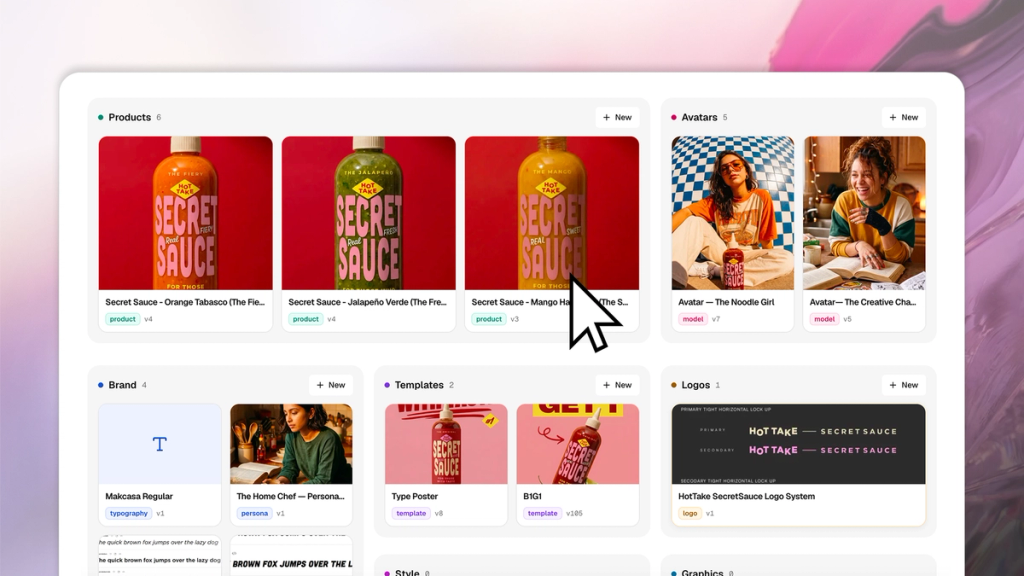
From there, you can make the kinds of UGC style demos that do well on TikTok, like testimonials and unboxings, without briefing a creator or booking a reshoot. The same videos can run as TikTok UGC ads, so your organic and paid content match.
Want proof? Performance agency Disorder Media cut its cost per purchase by 50% after scaling creative production with SecretSauce.
TikTok Shop tips for keeping UGC on-brand
These tips keep your TikTok Shop UGC consistent, no matter who or what makes it.
- Write a one-page brief: cover the product, the audience, one key message, and words to avoid. You can skip this if you're using SecretSauce, since it already remembers everything about your brand.
- Lock your product visuals: give every creator and tool the same approved product shots.
- Film three hooks per idea: keep the body of the video the same and swap the first 3 seconds.
- Test more than the hook: hooks move the needle most, but length, the person on camera, and the call to action all shift performance too. Change one thing at a time so you know what worked.
- Pick one visual signature: a brand color or sign-off that shows up every single time.
- Agree on usage rights upfront: get it in writing before you boost a creator's video.
- Review in batches: line up your last nine videos and spot what's drifting.
Want to go deeper on making UGC with AI? Our guide to AI UGC for brands covers how it works and when to use it. You'll also find step-by-step recipes in the SecretSauce cookbooks.
People also ask
Is UGC content legal?
Yes, UGC is legal when you have the rights to use it and you're upfront about what it is. Ask permission before reposting a customer's video, and get usage rights in writing from paid creators. Under the FTC's Disclosures 101 for social media influencers, paid and affiliate posts need a clear label like #ad.
AI-made UGC has one more rule: don't present an AI avatar as a real customer. The FTC's 2024 final rule on fake reviews and testimonials covers AI-generated testimonials, as Sidley's summary of the rule explains. TikTok's Community Guidelines also ask you to label realistic AI-generated content. This isn't legal advice, so check with a lawyer about your own setup.
Do I need a Shopify store to sell on TikTok Shop?
No. You can sign up through TikTok Shop Seller Center and list products directly on TikTok, with no other store needed. If you already run Shopify, you can connect it to sync your catalog and inventory, but it's optional. Either way, your TikTok Shop UGC links straight to the listing.
How do I become a TikTok Shop affiliate?
To become an affiliate, apply through TikTok Shop for Creator inside the TikTok app. In the US, you need to be 18 or older and meet a minimum follower count. TikTok has changed that number over time, so check the current requirement in the app before you apply.
If you're the seller, flip it around. Open an affiliate plan from the Affiliate Center in Seller Center, set a commission rate, and creators can find and promote your products.
Start your next batch on-brand
TikTok rewards brands that post a lot. Most small sellers already agree with that part. The hard part is keeping 30 videos a month on-brand when they come from a mix of creators and AI.

Nail the hook in the first 3 seconds, then give every video the same brand rules. Volume is how UGC TikTok turns into sales. Consistency is what makes all that volume add up to a brand people recognize.
Set up your Brand Brain once, and every piece of TikTok UGC you make after that starts on-brand.