11 viral social media trends for business owners who don’t have time to scroll
Our social media team went through Creative Radar, pulled trending posts across TikTok and Instagram right now, and cut it down to the 11 worth copying for your business this month.
You'll get a breakdown on the trend, why people are watching, how to make it work for your business, and how much time you've got before it dies. If something clicks, make it this week rather than next.
Here’s how to apply the trends in this blog to your own brand:
Pick one trend and copy the blog section + the Instagram link
Paste it into a new SecretSauce chat with this prompt: "clone this trending ad for my brand. Ask what inputs you need from me to make it nuanced."
Ask SecretSauce to publish the post to your Instagram account using Social Planner
Browse Creative Radar for more viral trends in your niche, clone them, and schedule them out.
1. Yellow font
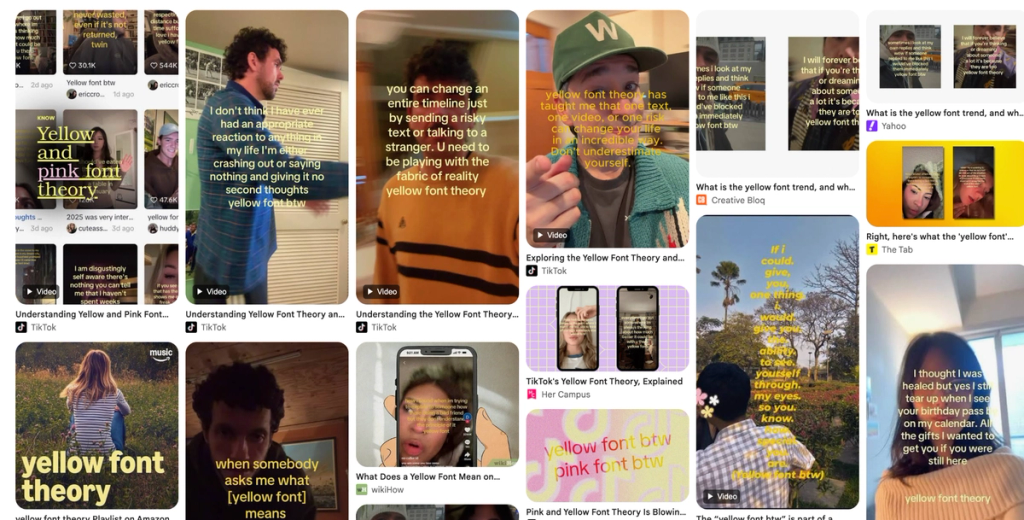
What it is: People write something honest and a bit raw, put it in yellow text, then sign off "yellow font btw." It tells you the post isn't a joke (which on TikTok is a real question because most captions are). It emerged around November 2025 and the color became shorthand for "I'm being serious right now."
Why it works
: Everything on these platforms reads as content, so nobody can tell what's performed and what's real. The yellow answers that before you've read a word.
How to make it yours: Use the yellow text, keep the sign-off, and post the thing you'd normally smooth over: the month you nearly closed, the order you got wrong, why your prices went up. Specificity is what makes it land. "It's been a tough year" reads like marketing. "We lost our second-biggest account in March and I didn't sleep properly until June" reads like a person. The tone matters more here than anywhere else on this list, so if your captions tend to come out sounding like a press release, it's worth teaching AI your actual voice first.
How much time you've got: Late, but not over. It's everywhere, which means people recognize it instantly, and that recognition works in your favor. It also means yours won't stand out on novelty, so whatever you write has to carry it. Post it if you have something real to say, skip it if you're only after the format.
2. Pink font
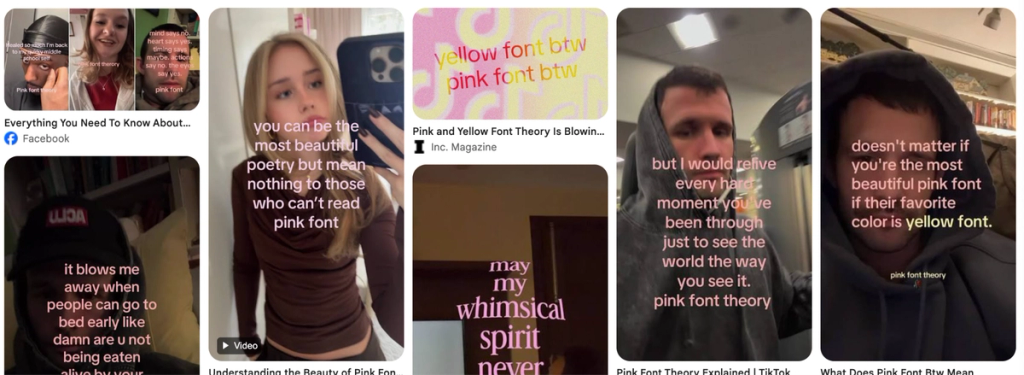
What it is: Yellow font's romantic cousin. Same pink-or-yellow signal, but aimed at crushes, daydreams, and almost-relationships instead of the heavy stuff. Comforting and a bit nostalgic rather than raw.
Why it works: Yellow font set the rule that color equals sincerity, so pink inherited it without anyone needing the concept explained twice. The difference is what you're allowed to say in it. Yellow is for heartbreak and attachment issues, the stuff that hurts. Pink is for crushes, daydreams, and wanting to be chosen, which is hopeful rather than heavy, and a lot more people are up for posting that.
How to make it yours: Run it the same way as yellow font, in pink, about the softer stuff. The customer who came back after five years. The regular whose order you know by heart. The reason you opened in the first place.
How much time you've got: Weeks. Narrowing it reset the clock, so there's more room here than on yellow.
3. Flop core
What it is: Posting the thing that didn't work, and making content about failure instead of burying it and posting a win.
Why it works: Everything on social media is polished, curated, and a bit fake, so sincerity stands out. So when you see a flop, it feels like they’re the only person in your feed not performing, and that's what wins people over. It makes them relatable, and relatable gets followed.
How to make it yours: Post the ecommerce product that didn't sell, the campaign that tanked, the menu item you pulled. Then do the part most brands skip and say what you learned. A flop with a lesson attached buys you credibility. A flop on its own is just you telling people you're bad at your job. If you run a restaurant, it's the dish nobody ordered. Retail, it's the stock that sat all summer. Agency, it's the pitch you lost and what you'd do differently.
Where it sits: Early to mid, and it'll last longer than most because it's an attitude rather than a sound.
4. Potentialmaxxing
What it is: Part of the "maxxing" trend, where people pick one area of their life and optimize it hard in public. Potentialmaxxing is the version aimed at output. Someone says they're going all in on their potential, then puts the receipts on screen: 47 posts in 30 days, 2.1M views this month, day 68 of getting up at 5.
Why it works: You can't fake this format, which is the whole appeal. Every other self-improvement post is someone saying they're on a journey and asking you to take their word for it. But on social media, those kinds of posts can get toxic: someone posts the glow-up, you compare yourself, everyone feels worse. Meanwhile, the natural response to potentialmaxxing is to root for them rather than measure yourself against them. That’s a much better reason to stick around than envy.
How to make it yours: Swap the adjectives in your marketing for numbers and see what happens. Not "we make great coffee" but "we pulled 4,200 shots last month and threw 61 away." Not "our customers love us" but "38 of our 50 orders this week came from people who'd ordered before." They don't need to be impressive numbers. They need to be real ones, which is a much easier bar and a far better signal.
Where it sits: Early to mid, and open to everyone since it runs on original audio.
5. Allow me to reintroduce myself
What it is: You reintroduce yourself, but with a claim about your character rather than your job, , so "not just a designer, a weirdo who happens to design," or "wanderer" instead of "travel agent." It’s set to Jay-Z's "Public Service Announcement," the "allow me to re-introduce myself, my name is Hov" line. It went big in March 2026 and has come back around.
Why it works: "Designer" tells people what you do. "A weirdo who happens to design" tells them who they'd be following. Job titles are interchangeable, so nobody picks you over the other 400 designers on the strength of one, but a character claim gives people something to latch onto, either because they see themselves in it or because it's specific enough to be interesting. The Jay-Z track does the rest, since it carries so much swagger that a claim which would sound arrogant said plainly comes off as fun.
How to make it yours: Skip your job title and claim the character instead. Not "bakery in London" but "the reason your diet failed." Not "wedding photographer" but "professional third wheel." Write the version a regular would use to describe you when you're not in the room, then say that one to the camera. Run it every quarter, because your audience turns over faster than you'd think and half the people seeing it will be meeting you for the first time.
Where it sits: Weeks. It's tied to a licensed track, so the usual sound clock applies, though this one has already come back once because the Jay-Z line is recognizable enough to keep resurfacing.
6. A new season has begun (Carrie from SATC sound)
What it is: A wordless stitch of cozy clips welcoming autumn, set to @olivialodenius's sound and built on Carrie Bradshaw's line about feeling the seasons click.
Why it works: Season changes are the one moment your entire audience hits at the same time, with nothing to explain. The nostalgia does the emotional lifting, so the clips themselves can be quite ordinary.
How to make it yours: The lesson here is calendar discipline. Every business gets three or four moments a year when its audience is already thinking about what it sells. Anything warm and indoor gets autumn. Anything for parents gets back to school. Anything cold gets the first proper heatwave. Build the seasonal content in the two weeks before the moment, not during it, because filming your autumn clips in late October means you've missed it and everyone can tell.
Where it sits: Peak, right now, and it dies the second autumn stops feeling new. Days, not weeks.
7. Someone's gotta hold it down (Baddest B*tches aint in LA)
What it is: A caption format set to ADELA's "Baddest B*tches Ain't In LA." You name whatever everyone's supposedly doing, then plant your flag on the opposite: "it can't always be 10k steps and matcha, someone's gotta hold it down with a bowl of pasta." Works on aspirational lifestyles, glamorous cities, wellness routines, anything with a socially approved version people feel behind on.
Why it works: It takes something people feel bad about and turns it into a flex. Everyone's aware of the optimized version of their life and everyone's failing to live it, so a post that says "someone has to be the other option" reads as a relief. The deadpan delivery is what stops it becoming a complaint, because you're not apologizing for the pasta, you're claiming it.
How to make it yours: Find the aspirational standard your industry keeps selling, then position yourself as the alternative. A bakery goes against clean eating. A pub goes against dry January. A print shop goes against everything being digital. A small hotel goes against the five-star spa weekend. Say the standard first so people recognize it, then name what you're offering instead. The one rule is to sound proud rather than defensive, because the moment it reads as an apology it stops being funny.
Where it sits: Weeks. It's tied to a sound, but the caption structure swaps into any context, which is what keeps a format alive longer than its audio.
8. The spin
What it is: You film the before, spin the camera or spin yourself, and when the frame settles you're looking at the after. The spin covers the edit, so instead of a hard cut between two clips it reads as one continuous move. It runs on original audio from @its_drfarah, which has 6.6K reels on it and a top post at 3M views.
Why it works: The spin buys you half a second of "wait, what's coming" at exactly the point where a normal cut would let someone scroll away. It's a retention trick as much as it is a creative idea.
How to make it yours: Use it on any before and after you're already filming. Empty bedroom to staged bedroom, raw ingredients to plated dish, bare wall to painted one. Post the spin version and a straight-cut version a week apart and compare how many people watched to the end. That's a test you can run this month with no extra work.
Where it sits: Weeks. It's original audio, which means business accounts can use it without a licensing workaround, and 6.6K recreations says it's still climbing rather than saturating.
9. Hooligan transition
What it is: Quick fashion outfit changes cut tight to the beat of "Hooligan" by BTS. It's spawned its own name, the Hooligan transition, and creators have run it through outfits, makeup, and interiors. Lots of looks, barely any talking.
Why it works: Every cut resets your attention, and the beat tells you exactly when the next one's coming, so you stay for it.
How to make it yours: Treat this as a variety format, not a fashion one. Anything you sell in versions works: menu items, colourways, pack sizes, service tiers, room types. A hotel cuts between five rooms, a café cuts between six drinks, a florist cuts between eight bouquets. One beat, one item, and no narration, because the moment you start explaining, the rhythm goes and people leave.
Where it sits: Weeks, though it depends on your account. K-pop tracks tend to run long because the fanbase keeps refreshing them, but licensed audio is where business accounts get locked out. If it won't load, film the same cuts to a trending instrumental and you keep most of the effect.
10. AI walking down the street
What it is: An AI-generated clip of someone walking down a street who drops what they're carrying, and the spill is the reveal. The walk is just setup, and the products scattering across the pavement is the payoff. One of the reels uses it as something that catches you off-guard, a guessing game like spilling a drink.
Why it works: The drop gives an ordinary product video a moment of unexpected accident, and accidents hold attention in a way a clean hero shot can't, because for half a second you're watching something go wrong. It's also cinematic in a way most small businesses can't afford to shoot, and everyone knows it's AI, so the polish reads as a style choice rather than a lie.
How to make it yours: You need three reference images: a person, a street or location that suits your brand, and your product. Then generate the walk, the drop, and the spill with AI. This one is built for a product reveal, so use it for a launch, a new flavor, a seasonal range, or the guessing-game version where you spill the product and let the comments name it. And yes, service businesses can run it too: an accountant spills receipts, a lawyer knocks over a stack of files, a hairdresser drops a fistful of clips.
Where it sits: Weeks, and it's early. The tooling changes every few months, which means the look will date faster than the format, so anything you make now is worth posting now.
11. Tell me about your brand collage
What it is: "Tell me about your brand" appears on screen as if someone just asked, then the video cuts straight into a fast collage of images that answer it. A lot of people use a 3x3 grid and give each cell a job: the aesthetic, the color palette, a close-up of the product, the customer you make it for, your workspace, and whatever inspired it.
Why it works: On a visual platform your aesthetic is the pitch, and people decide in about three seconds whether a brand is for them. A collage gets that across faster than any sentence could. It's also the rare trend that doesn't need you on camera or a shoot day, since it runs entirely on photos you already have.
How to make it yours:Pull 6-9 images that already exist in your camera roll: your best product shot, your workspace mid-mess, a color you use constantly, the person you picture buying it, something that inspired you. Lay them into a grid, put the question on top, and cut to the collage on the beat. No specific sound owns this one, so use whatever's trending.
Time to hop on the trend yourself
Creative Radar is the part of SecretSauce that watches this for you. It tracks what's blowing up in your industry, so you're not the one scrolling at 11pm hoping to spot something. Then when you find a format worth using, it clones it in a click with your brand already in it.
You'll get the best results if you steer the AI with nuances only you know. Creative Radar can build the flop core video, but you're the one who knows which dish nobody ordered all summer. It can build the potentialmaxxing post, but the number has to be yours: 4,200 coffees, 61 thrown out. It can build the "someone's gotta hold it down" clip, but you know whether your customers are the pasta-on-the-sofa crowd or the matcha crowd. Give it the specifics and it does the rest.